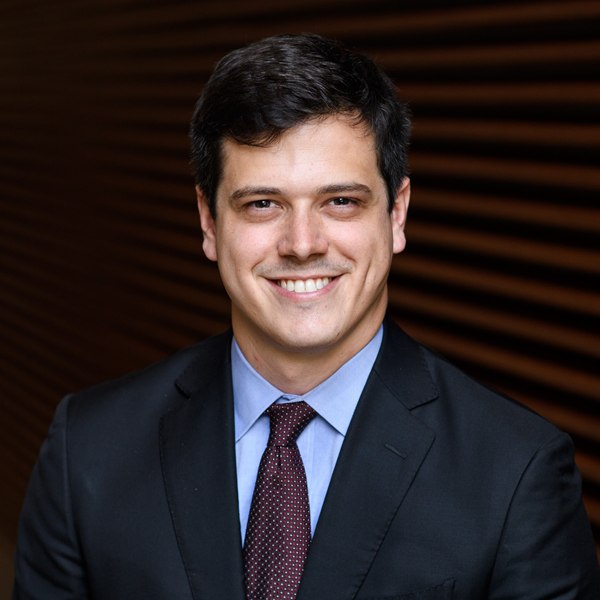
About
I am a Ph.D. candidate in Economics at the University of Michigan, and I am on the 2026–2027 job market. My fields are industrial organization, health economics, and labor economics. My research studies how public policy, antitrust regulation, and market structure shape innovation, with a focus on pharmaceutical markets.
Before graduate school, I earned an M.P.A. in Economics and Public Policy from Princeton University and worked on financial stability research at the U.S. Department of the Treasury’s Office of Financial Research and the Board of Governors of the Federal Reserve System.
Job Market Paper
Built to Sell: Strategic Entry in Pharmaceutical Markets
with Zoey Chopra and Garth W. Strohbehn
[Paper]
Abstract
Most new cancer drugs are invented by small biotechnology firms and brought to market by large ones, with control changing hands during clinical development. For a potential entrant, the prospect of acquisition acts as an entry subsidy. Antitrust authorities may view the same transaction as the removal of a future competitor. The policy remedy under debate bars incumbent firms from acquiring development-stage compounds in markets where they hold overlapping products. Using a quarterly panel that links oncology drug development to ownership of control rights, we show that acquirers are a small, identifiable set of large firms whose demand for new compounds rises predictably as their own products approach loss of exclusivity. We then model the sale of a development-stage compound as a first-price auction among the incumbents that engage, so that the set of permitted acquirers enters the price, and estimate how the acquisition payoff affects whether small firms enter development and which cancer they target. The ban cuts the expected acquisition payoff in half, redirects about 3 percent of small-firm entry away from the most contested cancers, and lowers the number of entering compounds by about 2 percent. When valuing deterred entrants and prevented killer acquisitions at the same approval odds, the ban raises expected approvals only if more than a fifth of the acquisitions it prevents would have been killer acquisitions, about three times the highest estimate in the literature.
References
Francine Lafontaine (Co-Chair)
Ross School of Business, University of Michigan
laf@umich.edu
Zach Brown (Co-Chair)
Department of Economics, University of Michigan
zachb@umich.edu
Charles Murry
Department of Economics, University of Michigan
ctmurry@umich.edu
Sarah Miller
Ross School of Business, University of Michigan
mille@umich.edu